home
work about contact

Parker Birwin's Playhouse

A fake restaurant I designed at 16 that became one of the top-rated spots in town before Google shut it down.

· 4.8-star google rating · 300K TikTok views · 200+ phone calls

Parker Birwin's Playhouse Logo

Overview

In 2020, when I was 16, I created a fake restaurant called Parker Birwin’s Playhouse. I built a Google Maps listing, designed a full brand identity with a logo, menu, and website, created merch, and set the address to my high school in Spanish Fork, Utah. What started as a joke turned into a viral local phenomenon — the listing earned a 4.8-star rating, became one of the top-rated restaurants in town, generated over 200 phone calls from people trying to place orders, and racked up roughly 300,000 views through TikTok alone.

It’s the most fun I’ve ever had designing something, and it taught me more about brand building, audience engagement, and the power of design to create a believable experience than any class or client project could.
Role & Scope

Solo project. I created the brand identity, logo, menu design, website, merch, Google Maps listing, and managed the entire “customer experience” — which mostly meant answering phone calls from confused and delighted strangers.

The Concept

The idea was simple: what if I created a restaurant that didn’t exist, but made it look and feel completely real? I wanted to see how far design and branding alone could carry an experience. No physical location, no food, no staff — just a Google Maps pin, a website, a menu, and a brand identity convincing enough to make people believe.

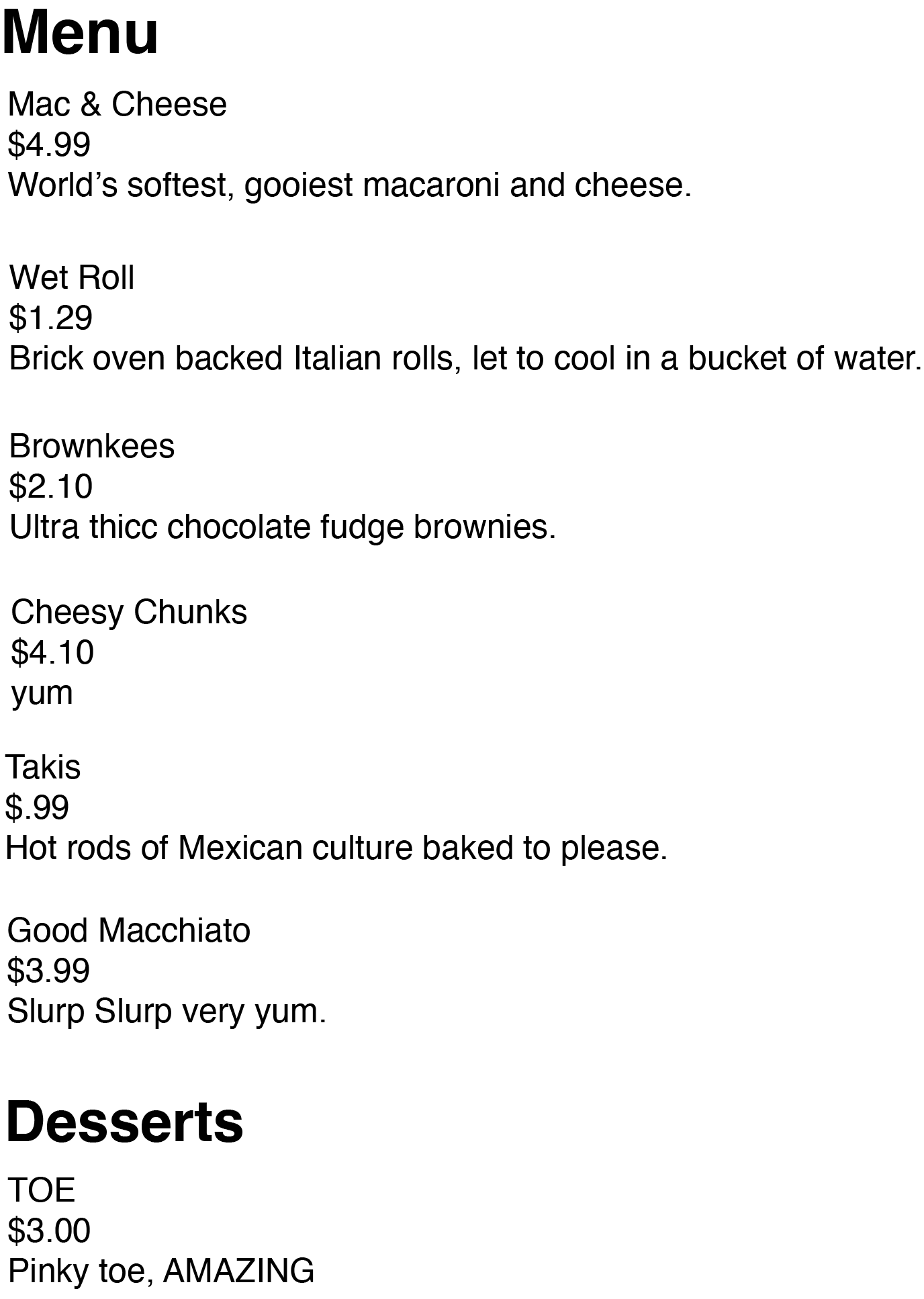
I set the listing’s address to my high school, uploaded photos, wrote descriptions, and filled in all the details Google Maps asks for — hours, contact info, menu items. The phone number was my personal cell. The menu was intentionally absurd: brick oven baked Italian rolls, cheesy chunks, white cream, “toe good” macchiato. It looked legitimate at a glance, but the details were ridiculous if you actually read them.

What Happened

The Reviews

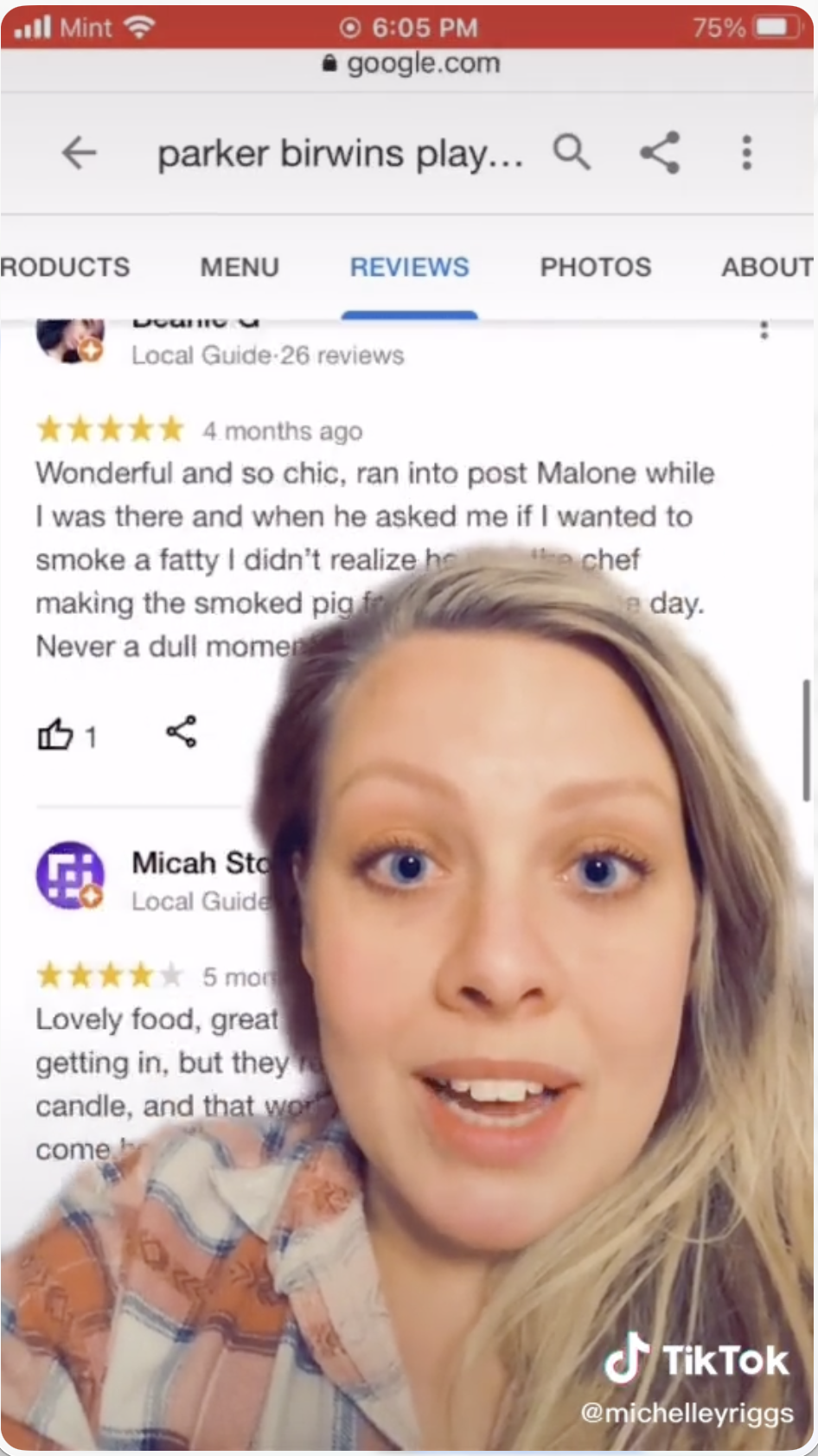
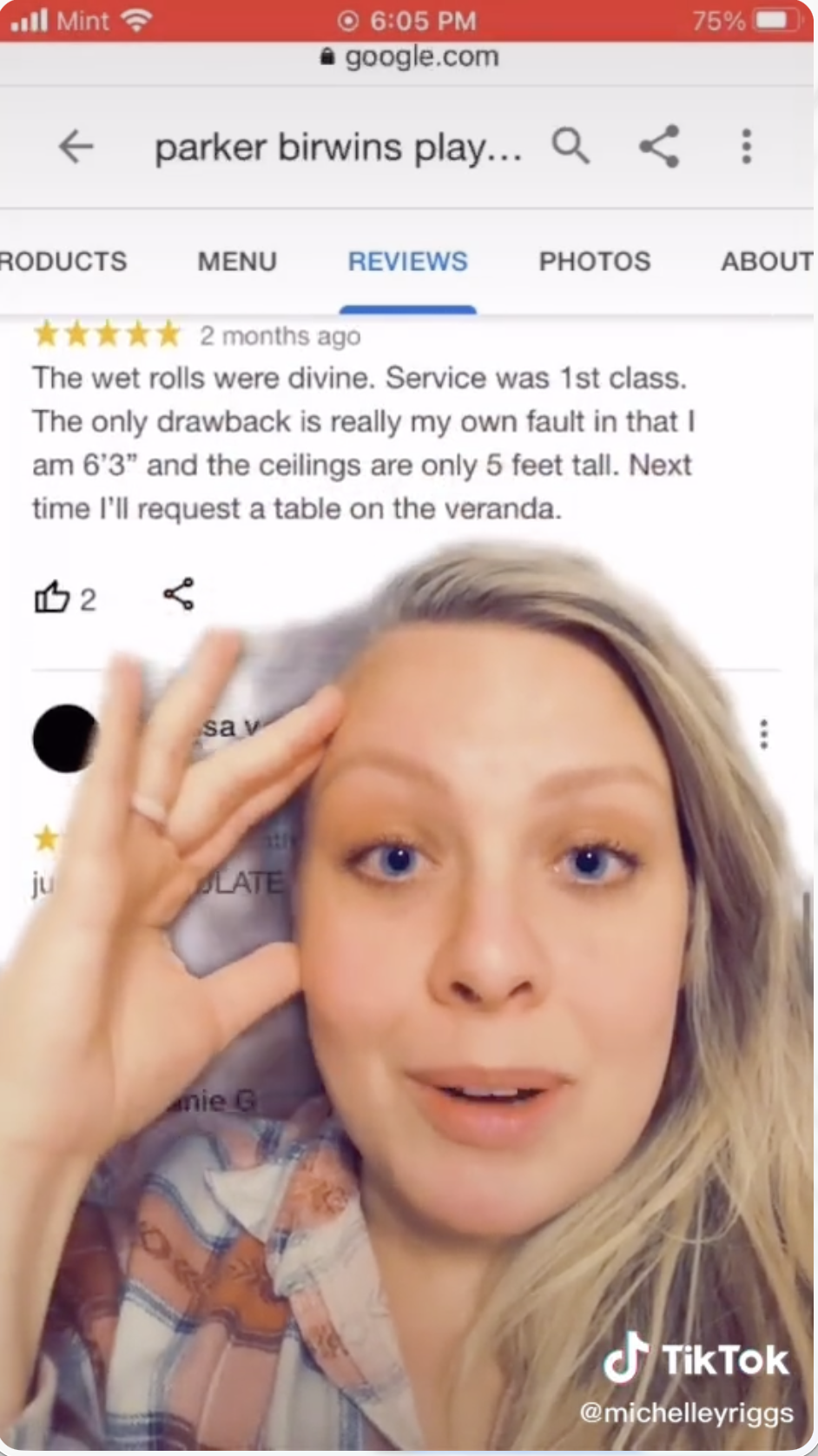
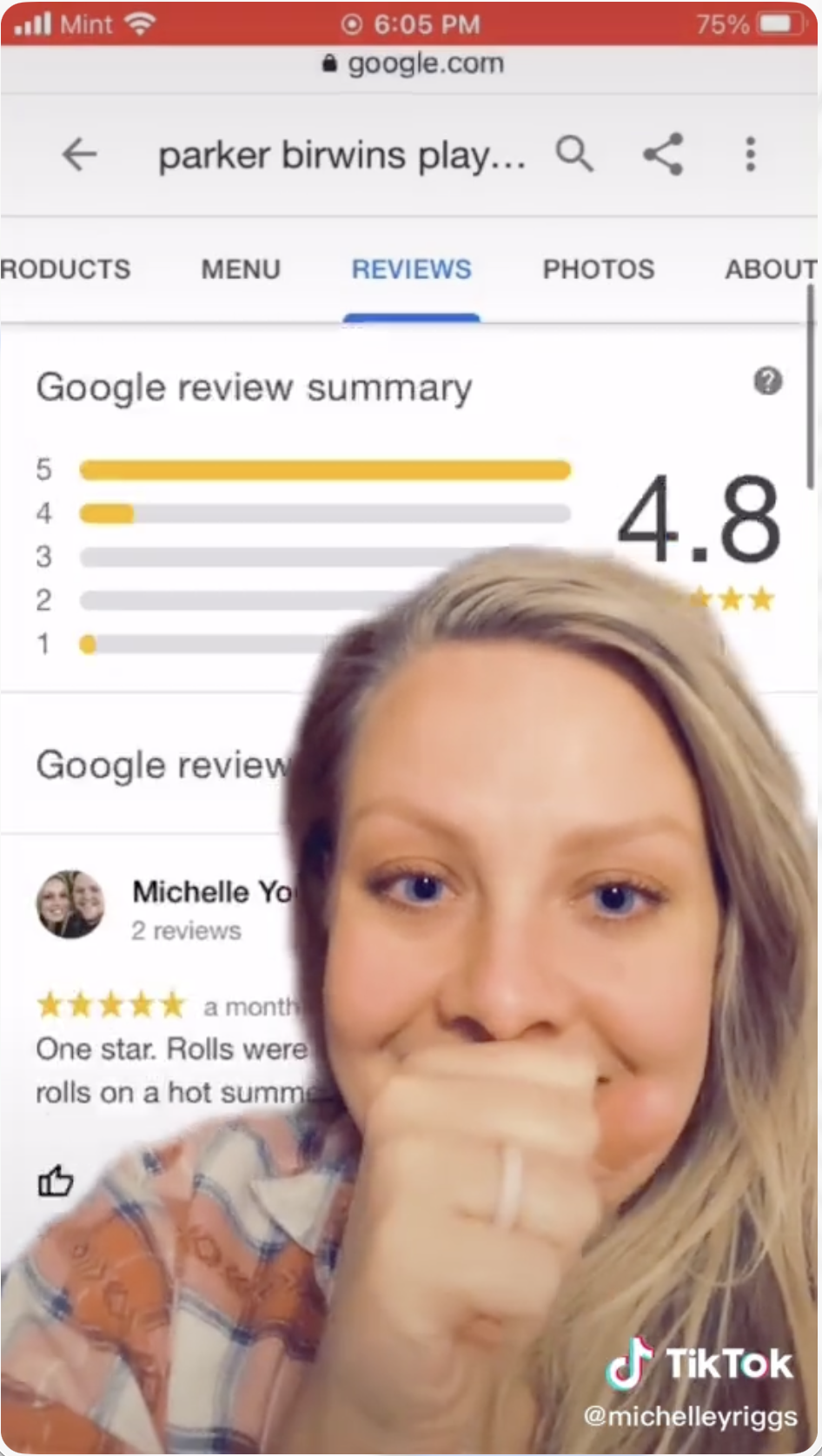
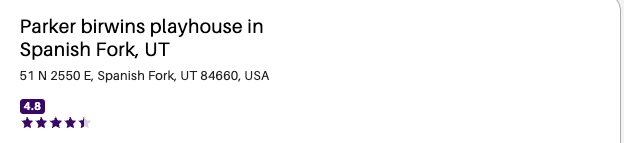
People started finding the listing organically on Google Maps. And instead of reporting it, they went along with the joke. Strangers left detailed, enthusiastic five-star reviews playing along with the fake menu items. One reviewer wrote about ordering the wet salmon filet. Google Local Guides — verified, high-credibility reviewers — were leaving reviews, which boosted the listing’s legitimacy even further. The restaurant climbed to a 4.8-star rating with 35 reviews and became one of the highest-rated restaurants in Spanish Fork.

Google review
Google review Google review Google review
Google review Google review
Google review
Google review Google review Google review

The Phone Calls

I designed and printed QR code flyers and placed them across a few college campuses. The approach was intentionally non-intrusive — I put them in spots people would discover if they were curious, rather than plastering them in high-traffic areas. I wanted Blankmind Radio to be something people chose to find, not something shouted at them.

The TikToks

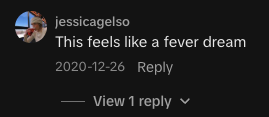
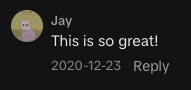
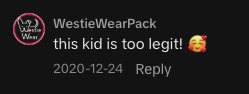
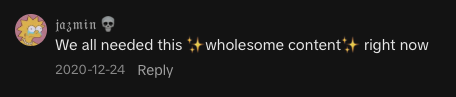
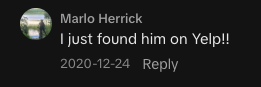
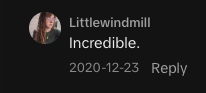
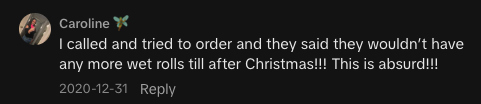
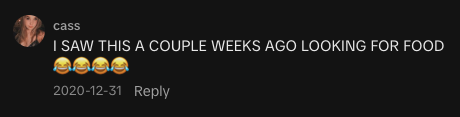
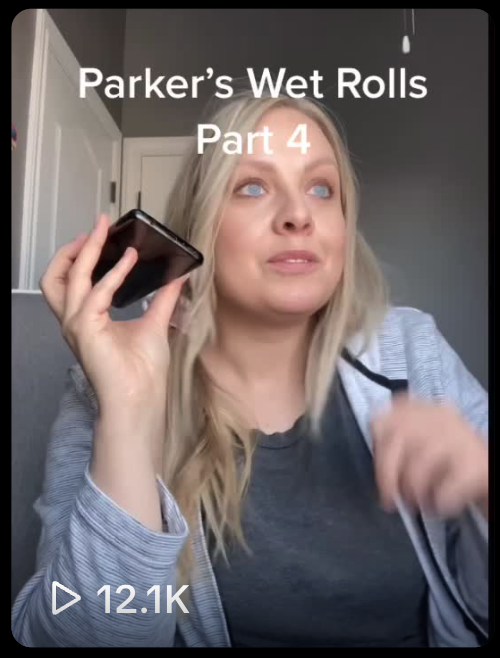
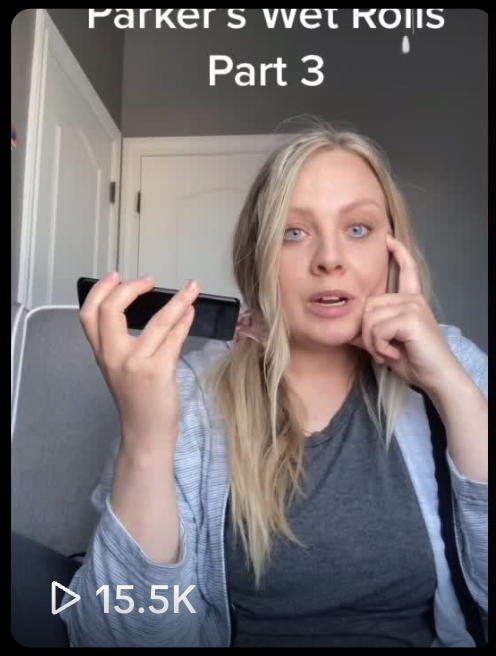
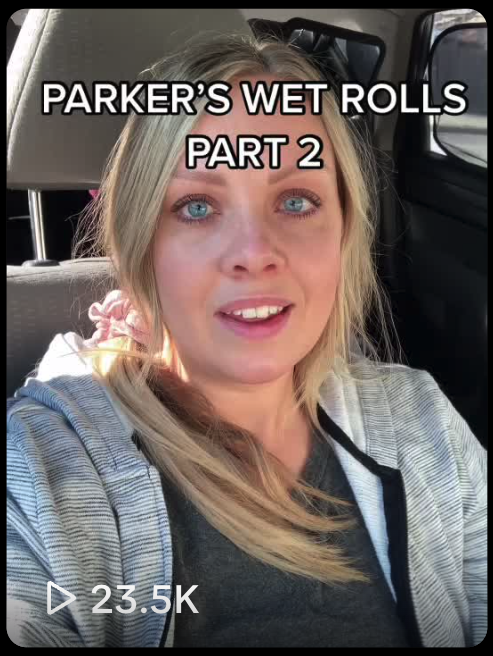
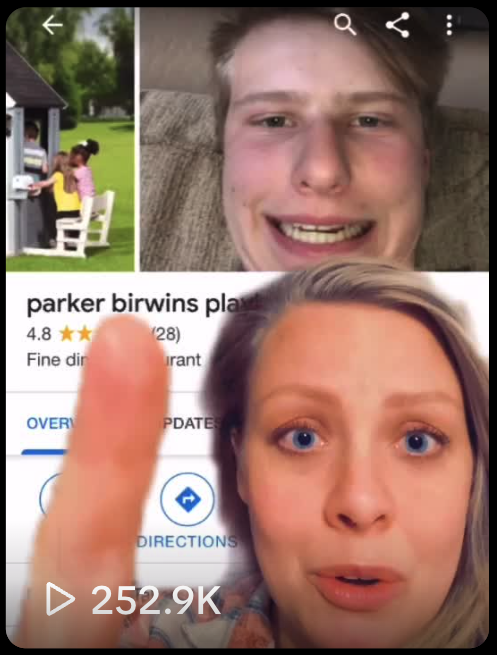
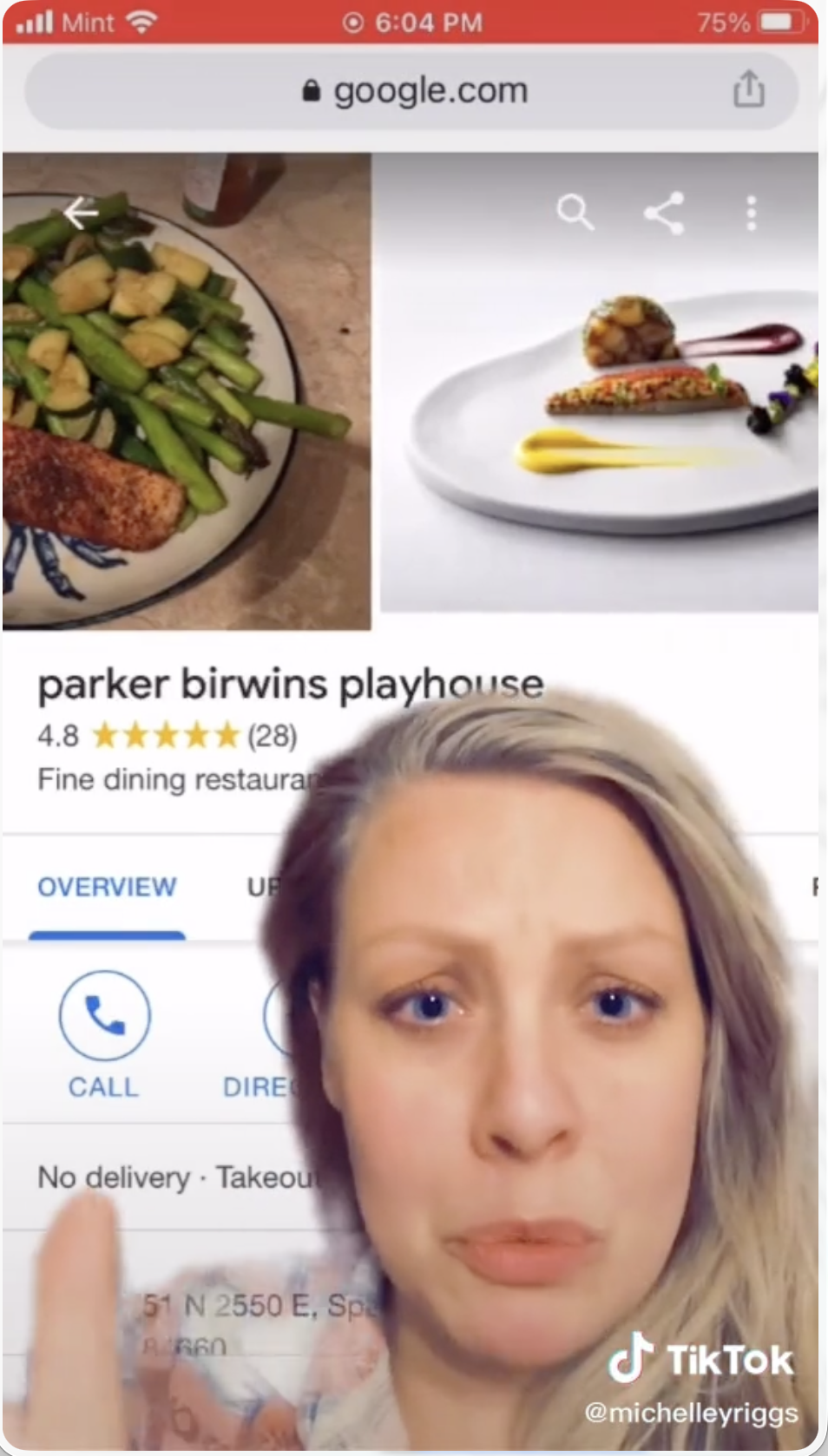
A woman discovered the listing and made a series of TikTok videos about it. Between her videos, the content pulled in roughly 300,000 views. I had no connection to her — she found it on her own and thought it was fascinating enough to document. That’s organic reach driven entirely by the strength of the concept and the design’s believability.

TikTok screenshot TikTok screenshot TikTok screenshot TikTok screenshot

The End

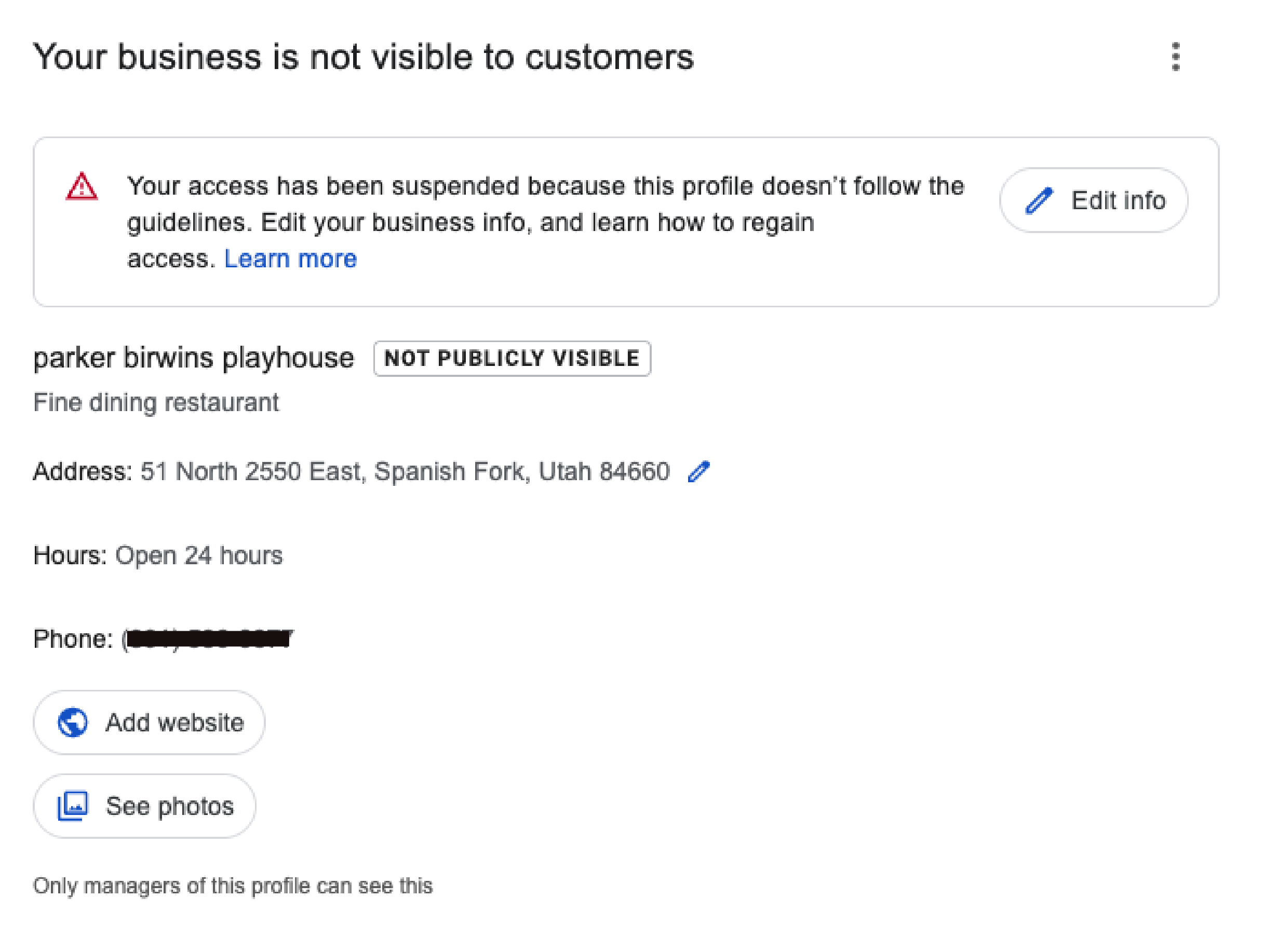
Eventually, enough people reported the listing as a fake restaurant that Google suspended it. By that point, the project had lived a full life — real reviews, real phone calls, real virality, all for a place that never existed.

Google listing suspended screenshot

What I Designed

This wasn’t just a prank — it was a full brand design exercise. I created:

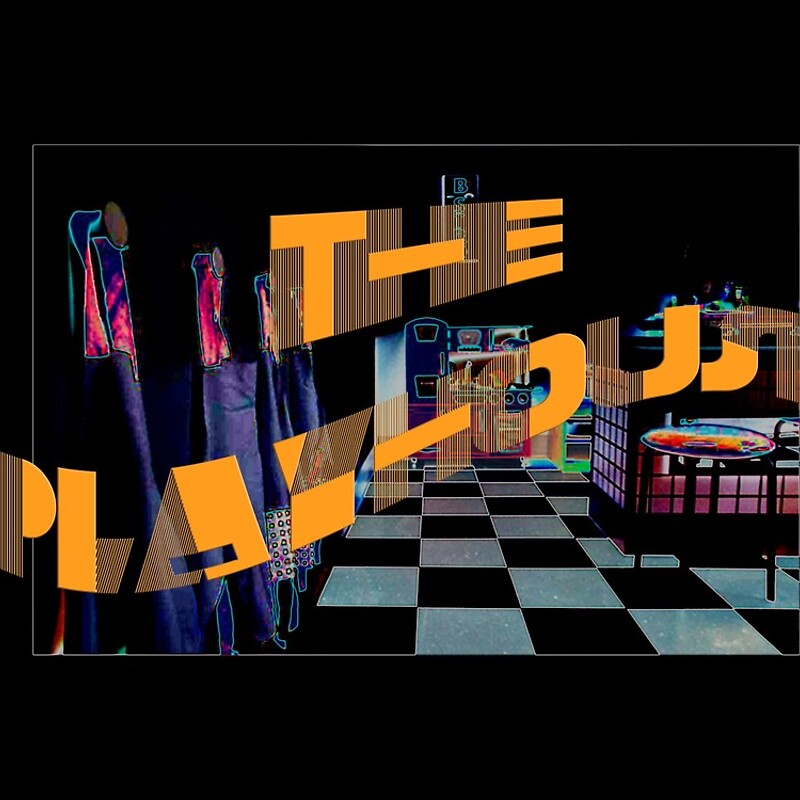
A logo and visual identity designed in Photoshop, built to feel like a real, slightly quirky local restaurant.

A website built on Google Sites that served as the restaurant’s online presence, complete with the menu and brand imagery.

A full menu with designed layout and typography — absurd items presented with the visual seriousness of a real restaurant’s menu.

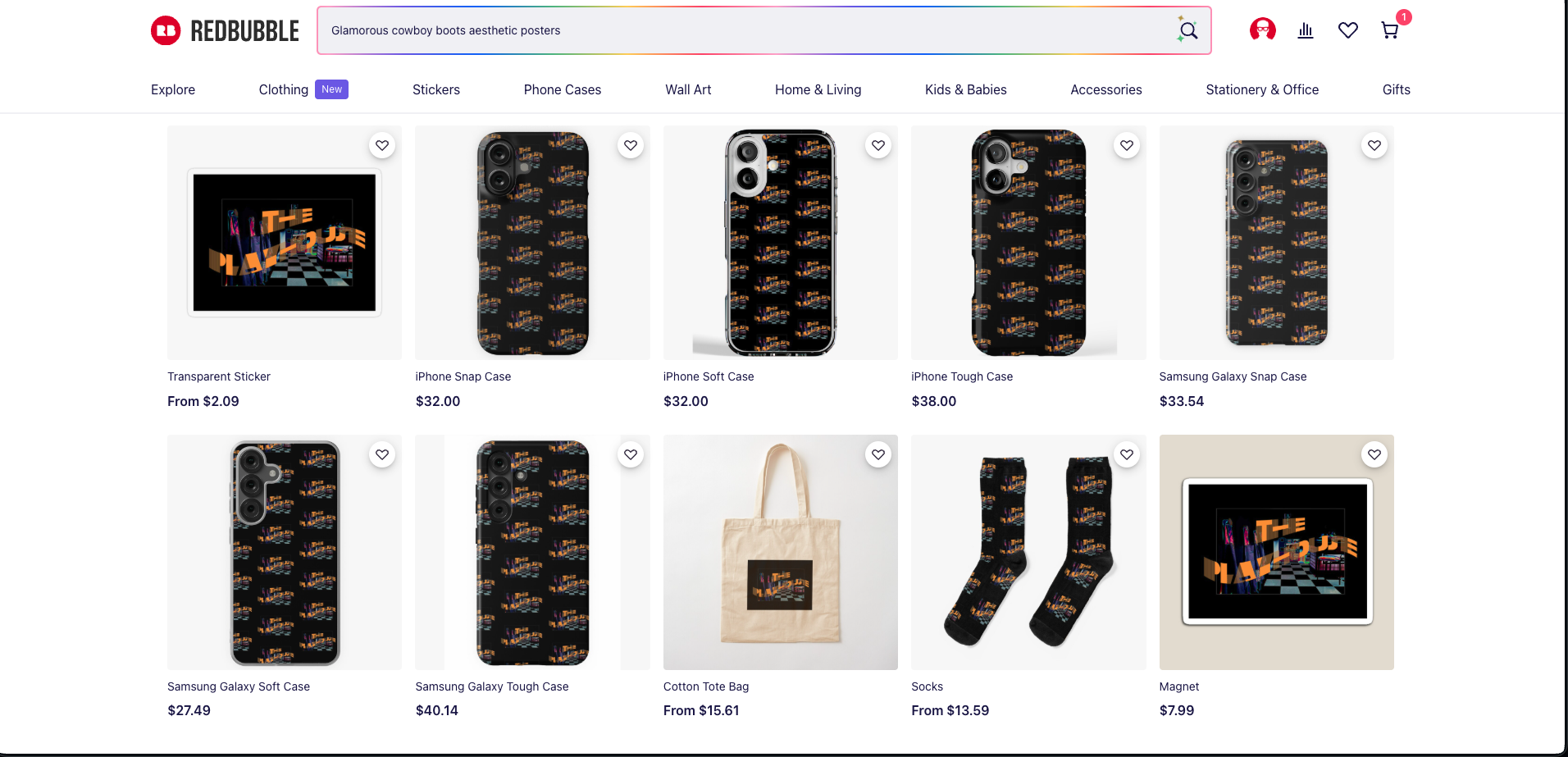
Merch listed on RedBubble. Nobody bought any, but the fact that it existed added another layer of legitimacy to the brand world.

A Google Maps listing fully filled out with hours, photos, contact info, and all the details that make a business look real on the platform.

Playhouse website screenshot

Key Takeaways

Design creates belief. People believed Parker Birwin’s Playhouse was real because it looked and felt real. The logo, the menu layout, the Google Maps details, the website — every touchpoint was designed to be cohesive and convincing. The project proved that strong branding can make anything feel legitimate.

Audiences will participate if you give them something worth participating in. I didn’t ask anyone to leave reviews or make TikToks. People chose to engage because the concept was fun and the execution was good enough to play along with. The best engagement is voluntary.

Constraints breed creativity. I was 16 with no budget, using free tools — Google Sites, Photoshop, RedBubble, Google Maps. Every asset was made with what I had. The limitation forced me to focus on what actually matters in branding: consistency, detail, and a clear concept.

Reflection

Parker Birwin’s Playhouse is the project that showed me what design can do when it’s in service of a strong idea. I didn’t have a product to sell or a client to serve — I had a concept and I wanted to see how far I could take it. The answer was a 4.8-star rating, 200+ phone calls, 300,000 TikTok views, and a Google suspension notice.

Looking back, this was the project where I first understood that brand design isn’t just logos and color palettes — it’s building a world that people believe in and want to be part of. Everything I’ve done since, from Blankmind Radio to Studio Node, builds on that same instinct.